




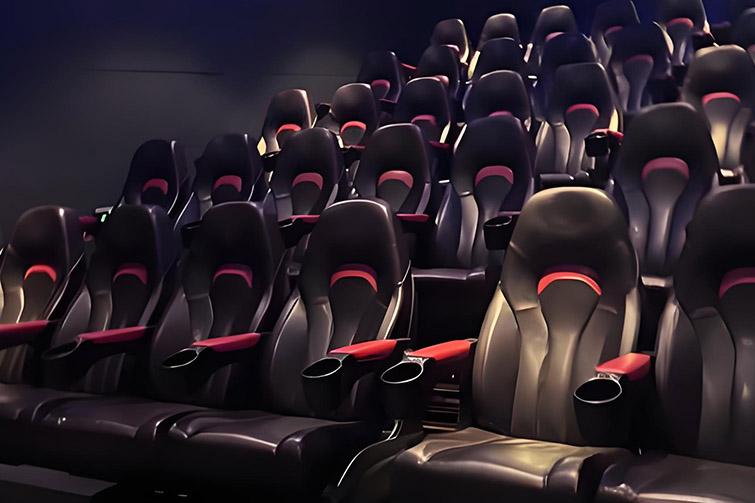
The Art of Seating: How to Choose Comfortable Chairs for Movie Viewing
The magic of cinema extends far beyond the screen. While visual fidelity and immersive sound are critical, the physical interface between the audience and the experience—the seat—is arguably just as important. A poorly designed seat can lead to distraction, fatigue, and physical discomfort, pulling a viewer out of the story .Whether outfitting a commercial multiplex, a community auditorium, or a private home theater, selecting comfortable seating requires a deep understanding of ergonomics, materials, and spatial dynamics. This guide provides a comprehensive framework for choosing the perfect cinematic seats.
1. The Foundation of Comfort: Ergonomics and Human Factors
True comfort is not merely about softness; it is about support. The human body is not designed to remain static for the duration of a feature film, which often runs between 90 and 180 minutes. Therefore, the seat must accommodate natural posture and facilitate micro-movements.
Spinal Support: A quality cinematic seat should support the natural S-curve of the spine. Look for a prominent lumbar bulge designed to support the L3 to L5 vertebrae .The backrest angle is equally crucial. For standard fixed seating, a backrest angle of 100 to 105 degrees is recommended to balance alertness with comfort. For recliners, the optimal range for passive viewing widens to 115 to 135 degrees, which helps maintain a neutral spine and reduces neck strain .
Seat Pan Design: The seat pan depth should ideally be between 470 and 500 mm to accommodate various body types . A "waterfall" front edge—where the cushion slopes downward slightly—is a hallmark of good design, as it reduces pressure on the back of the thighs (the popliteal area), promoting healthy blood circulation during long screenings .
The Recline Factor: If selecting recliners, pay close attention to the mechanism. It should operate quietly—ideally under 40 decibels—to avoid disturbing the audience during quiet scenes .The mechanism should also be damped to prevent abrupt, jarring movements.
2. Material Science: Balancing Feel, Durability, and Maintenance
The materials used in a seat determine not only its initial comfort but also its longevity and ease of upkeep .The primary choices are leather (or PU leather), fabric, and occasionally specialty materials.
| Material Type | Advantages | Disadvantages | Best Use Case |
|---|---|---|---|
| Leather / PU | High-end aesthetic, easy to clean with a damp cloth, durable and stain-resistant . | Can feel sticky or hot in warm climates; higher cost for genuine leather; PU may crack over time . | Luxury home theaters, VIP sections, commercial theaters prioritizing easy cleaning . |
| Fabric | Superior breathability and softness; comfortable in various temperatures; wide range of colors and textures . | More difficult to clean, prone to staining and absorbing odors; may show wear (pilling) over time . | Family home theaters, venues where climate control is variable, budget-conscious installations . |
| Mesh / Perforated | Maximum breathability; often used in modern or office-inspired designs. | Can feel less "luxurious"; may not provide the same plush feel. | Specific ergonomic chairs, venues in hot climates without air conditioning. |
Cushioning: The internal foam is just as important as the cover. High-resiliency (HR) foam, often layered with different densities, provides the best support. A dual-density approach—firmer foam at the base for support and a softer top layer for pressure distribution—is a sign of a well-engineered seat .For high-traffic commercial applications, upholstery should be rated for high abrasion resistance (e.g., 80,000+ Martindale cycles or 100,000 double rubs) .
3. The Critical Role of Spatial Geometry
A comfortable seat does not exist in a vacuum; its comfort is heavily influenced by its position in the room relative to the screen and other seats .
Sightlines and Viewing Angle: The seat must position the viewer's eyes correctly. The golden rule is to keep the vertical viewing angle to the top of the screen under 30 degrees to prevent neck strain.The distance from the screen should be such that the viewer doesn't have to constantly scan to see the edges of the image, typically 1.5 to 2.5 times the screen height.
Row Spacing (Pitch): This is the distance from a point on one seat to the same point on the seat in front of it. For standard fixed seating, a pitch of 100–120 cm is recommended . For recliners, which require space for the extended footrest, this must increase significantly to 120–140 cm or even 160–190 cm to ensure safe circulation and that the reclined position does not intrude on the next row's space .
Rake and Stagger: In multi-row setups, the floor must be raked (stepped) so that each row sits higher than the one in front. A vertical separation of 120–150 mm between rows is typically sufficient to provide an unobstructed view over the heads of the audience in front .Staggering seats in a slightly curved or "chevron" layout can also improve sightlines and provide a sense of extra elbow room .
4. Matching the Seat to the Venue
The intended use of the space dictates the type of seat required .
Commercial Multiplex: Durability and capacity are key. Row seating with foldable seats and durable, easy-to-clean upholstery (like PU) is the standard .The focus is on withstanding heavy, daily use with minimal maintenance .
Premium Cinema/VIP Lounge: The goal is luxury. Premium recliners with plush upholstery, wide armrests, and ample legroom are the norm -8. Features like integrated tray tables, USB charging ports, and even quiet massage functions can elevate the experience .
Home Theater: This allows for maximum personalization. Luxury home theater seating often mimics premium cinema seats but can be tailored to the decor. For smaller rooms, compact loveseat recliners or modular seating can maximize space without sacrificing comfort .The key is to balance the desire for a "cinema feel" with the practical constraints of the room's dimensions .
5. Long-Term Considerations: Maintenance and Safety
A comfortable seat must remain comfortable over time. This requires proactive planning .
- Cleanability: Look for removable seat covers with concealed zippers for deep cleaning .Materials should be resistant to stains and, in commercial settings, able to tolerate hospital-grade disinfectants without fading. Cup holders should have removable liners with drainage to prevent sticky residue .
- Structural Integrity: The frame should be made of thickened cold-rolled steel or reinforced aluminum to ensure stability and a high weight capacity (ideally ≥120-150 kg) . Avoid thin metal or plastic frames that may warp or squeak over time.
- Safety Compliance: Ensure the seats meet relevant fire safety standards (like California TB 117 or equivalent local regulations). For powered seats, verify that electrical components are properly grounded .
Conclusion
Choosing comfortable seating for movie viewing is a multifaceted decision that blends science with design. By prioritizing ergonomic support, selecting durable and appropriate materials, and carefully planning the spatial layout, you can create an environment that truly enhances the cinematic experience. Remember that the best seat is one that the viewer forgets about entirely, allowing them to become fully immersed in the world on the screen. Whether for a stadium-sized auditorium or a cozy corner of a living room, investing wisely in seating is an investment in the magic of movies.
Related Posts